Margaret Young’s Long and Winding Row
May 06, 2026 | Women's Rowing
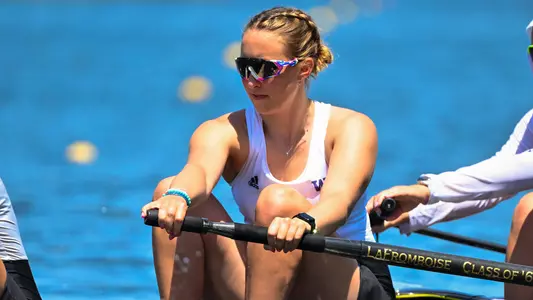
When Margaret Young pulls an oar through the waters of Lake Washington, she carries more than power in each stroke. She carries perspective.
Now a senior and Commodore for the University of Washington women's rowing team, Young didn't arrive in Seattle dreaming of NCAA podiums. The Bay Area native came with a basketball background and only a vague sense that rowing "seemed pretty cool." A pre-freshman email about UW's early-start program nudged her toward Conibear Shellhouse, and almost before she knew it, she had earned a spot in the novice eight.
She loved it immediately — the endurance, the rhythm, and most of all, the team.
But rowing at Washington doesn't leave much room for comfort. Sophomore year delivered a harsh wake-up call: Young missed the team's 6K erg standard by a fraction and was cut. She went home devastated, questioning whether she belonged — or whether she should walk away entirely.
She had a choice: move on or fight back.
Young chose the harder path. She trained on her own at Pocock Rowing Center, waking early before classes and rebuilding her fitness stroke by stroke. The process was lonely, but she wasn't truly alone — coaches checked in, friends encouraged her, and former teammates showed up to watch her test. The support reminded her what she valued most: the people.
"I've found my best friends on this team," Young says. "Just the most hardworking, down-to-earth, supportive women." She missed the shared laughter, the grind, and the sense of belonging that comes from being part of something bigger than herself.
When she earned her way back onto the roster, she returned not seeking redemption, but with a renewed sense of opportunity.
That experience now shapes how she leads.
As Commodore — a fall and winter leadership role centered on culture, communication, and daily standards — Young helps set the tone for everything from warmups to off-the-water bonding. Alongside co-Commodore Camille Randall, she's embraced a simple theme for the season: No bad days.
"There are only so many left," Young says of her senior year. "We want to make the most of every day together and be the best we can for each other." The idea isn't forced positivity — it's presence.
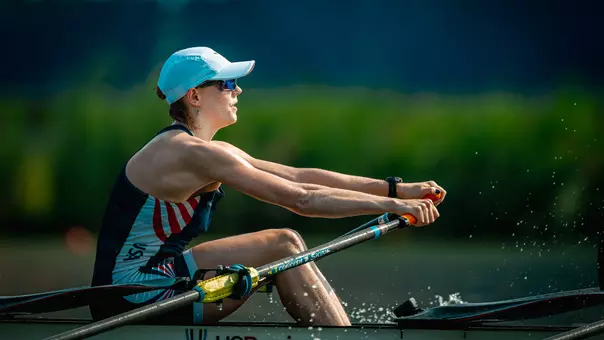
Rowing has taught Young how to sit with discomfort. Unlike basketball, where you react to opponents and game flow, rowing strips everything down to what's inside your own boat. No substitutions. No hiding. Progress is measured — sometimes painfully — in splits and meters. Learning to manage the mental side has been as important as building physical strength. Those are the lessons she hopes to pass on.
"I want a freshman who's a walk-on to believe they could become Commodore of Washington rowing," she says. "Because they absolutely can."
As a team, the Huskies aren't shy about their ambitions. Young talks openly about Big Ten titles and pushing toward the top of the NCAA podium. For her, wanting to win isn't arrogance — it's honesty.
After graduation, Young plans to return to the Bay Area, hoping to work with children — she has spent recent summers at Seattle Children's Playground, a preschool supporting kids with and without disabilities. Coaching rowing may also be in her future. Whatever comes next, she'll carry forward the lessons of the boathouse: resilience, connection, and the quiet power of showing up again after being told no.
Margaret Young didn't just row her way back onto the team. She reshaped her story — and became the kind of leader who reminds those around her that progress isn't always linear, growth often comes through challenge, and sometimes the bravest stroke is the one that brings you back to the start.
This story originally appeared in the Spring, 2026, edition of Washington Rowing's SWEEP Magazine. To read the entire edition, click the link at the top of this page.
Now a senior and Commodore for the University of Washington women's rowing team, Young didn't arrive in Seattle dreaming of NCAA podiums. The Bay Area native came with a basketball background and only a vague sense that rowing "seemed pretty cool." A pre-freshman email about UW's early-start program nudged her toward Conibear Shellhouse, and almost before she knew it, she had earned a spot in the novice eight.
She loved it immediately — the endurance, the rhythm, and most of all, the team.
But rowing at Washington doesn't leave much room for comfort. Sophomore year delivered a harsh wake-up call: Young missed the team's 6K erg standard by a fraction and was cut. She went home devastated, questioning whether she belonged — or whether she should walk away entirely.
She had a choice: move on or fight back.
Young chose the harder path. She trained on her own at Pocock Rowing Center, waking early before classes and rebuilding her fitness stroke by stroke. The process was lonely, but she wasn't truly alone — coaches checked in, friends encouraged her, and former teammates showed up to watch her test. The support reminded her what she valued most: the people.
"I've found my best friends on this team," Young says. "Just the most hardworking, down-to-earth, supportive women." She missed the shared laughter, the grind, and the sense of belonging that comes from being part of something bigger than herself.
When she earned her way back onto the roster, she returned not seeking redemption, but with a renewed sense of opportunity.
That experience now shapes how she leads.
As Commodore — a fall and winter leadership role centered on culture, communication, and daily standards — Young helps set the tone for everything from warmups to off-the-water bonding. Alongside co-Commodore Camille Randall, she's embraced a simple theme for the season: No bad days.
"There are only so many left," Young says of her senior year. "We want to make the most of every day together and be the best we can for each other." The idea isn't forced positivity — it's presence.
Rowing has taught Young how to sit with discomfort. Unlike basketball, where you react to opponents and game flow, rowing strips everything down to what's inside your own boat. No substitutions. No hiding. Progress is measured — sometimes painfully — in splits and meters. Learning to manage the mental side has been as important as building physical strength. Those are the lessons she hopes to pass on.
"I want a freshman who's a walk-on to believe they could become Commodore of Washington rowing," she says. "Because they absolutely can."
As a team, the Huskies aren't shy about their ambitions. Young talks openly about Big Ten titles and pushing toward the top of the NCAA podium. For her, wanting to win isn't arrogance — it's honesty.
After graduation, Young plans to return to the Bay Area, hoping to work with children — she has spent recent summers at Seattle Children's Playground, a preschool supporting kids with and without disabilities. Coaching rowing may also be in her future. Whatever comes next, she'll carry forward the lessons of the boathouse: resilience, connection, and the quiet power of showing up again after being told no.
Margaret Young didn't just row her way back onto the team. She reshaped her story — and became the kind of leader who reminds those around her that progress isn't always linear, growth often comes through challenge, and sometimes the bravest stroke is the one that brings you back to the start.
This story originally appeared in the Spring, 2026, edition of Washington Rowing's SWEEP Magazine. To read the entire edition, click the link at the top of this page.
For news, scores, highlights and more, download the Go Huskies app on your mobile device. Follow @washingtrowing on Instagram, Threads, Facebook and TikTok; and @UW_Rowing on X, and subscribe to UW Athletics on YouTube for the latest on the Dawgs.

Players Mentioned

COX
/ Women's Rowing
/ Women's Rowing
Tuesday, August 11
Thursday, July 16
Wednesday, July 08
Wednesday, July 08